The Spiritual Significance of Diwali and Its Festivals
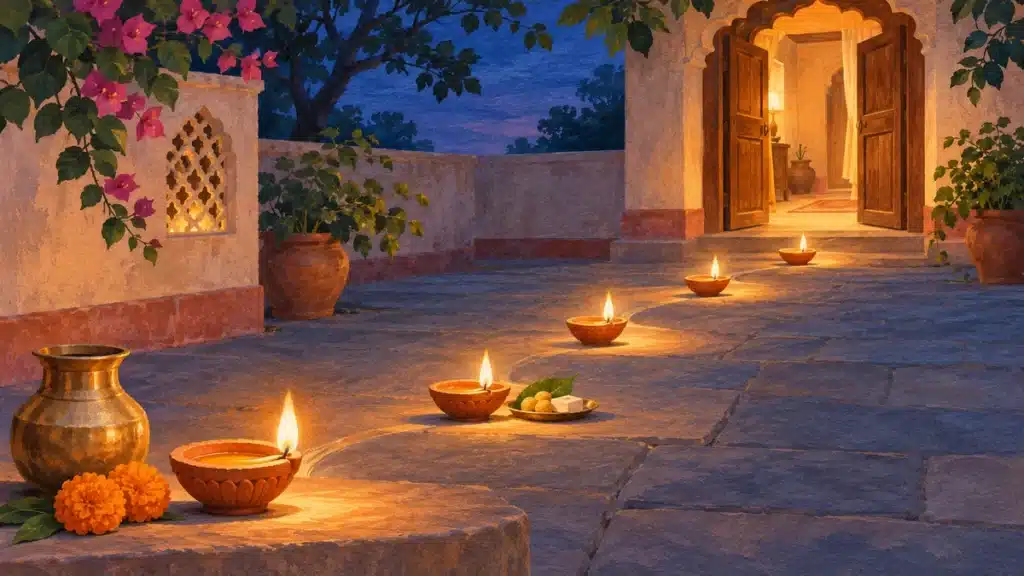
The house can be spotless, the lamps beautifully arranged, and the mind still crowded.
There may be a conversation we keep postponing. A resentment that returns whenever a particular name is mentioned. Or a quiet anxiety about having enough, even while we prepare to welcome the goddess of prosperity.
The spiritual significance of Diwali becomes more immediate when we bring these ordinary realities into the celebration. The festivals around it offer occasions to examine what we value, what we need to release, and how we live with other people.
For devotees, these are sacred observances: worship, remembrance, offerings, and encounters with the divine. The reflections below begin with those traditions and then ask how their meanings might enter everyday life. They are an interpretation, rather than a claim that every community understands the festivals in the same way.
Understanding the festival season
A familiar account follows five observances: Dhanteras, Naraka Chaturdashi, the main Diwali worship, Govardhan Puja or related regional celebrations, and Bhai Dooj. This is a useful guide, though the season does not fit one uniform calendar.
The Hindu American Foundation’s Diwali overview describes regional differences and also includes Govatsa Dwadashi before Dhanteras. Some South Indian communities give particular importance to Naraka Chaturdashi. Gujarati New Year and Bali Pratipada bring other meanings to the days that follow.
Family traditions matter. A festival learned at a grandmother’s altar may carry details that a general guide cannot capture. Understanding its meaning can begin by asking someone in the family why a particular lamp, offering, or prayer has always been part of the celebration.
Continue reading after sign in.
This article is available to registered readers. Sign in to continue, or register with a basic subscriber account.